BSK Associates
  • SERVICES
    • Environmental Analysis
    • Environmental Consulting
    • Geotechnical
    • Special Inspection
    • Materials Testing
    • Geophysical 
  • MARKETS
    • Agricultural
    • Commercial & Industrial
    • Education
    • Government
    • Healthcare
    • Energy
    • Transportation
    • Water Resources
    • Solid Waste
  • ABOUT
    • Executive & Board
    • Senior Leadership
  • CAREERS
  • CONTACT
  • CLIENT CONNECT
  • Menu Menu
BSK: PFAS testing

BSK Associates & PFAS Testing

February 24, 2020/in News/by bskassociates

BSK Associates & PFAS Testing


What Are PFAS?
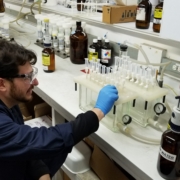
BSK Associates & PFAS Testing.

BSK Associates & PFAS Testing.

PFAS are man-made chemicals that include Perfluorooctanoic acid (PFOA), Perfluorooctanesulfonic acid (PFOS), GenX, and several additional chemicals. In fact, PFAS are made up of more than 3,000 man-made chemicals that are largely unregulated.

The U.S. began manufacturing these chemicals during the 1940’s. In 2006, the EPA launched the PFOA Stewardship Program which eliminated the use of several PFAS chemicals. Unfortunately, the U.S. still receives these PFAS compounds from imported goods from around the world.

PFAS are a concern because they do not break down and therefore bio accumulate over time. Furthermore, food, household products, animals, drinking water, and humans have all tested positive for PFAS. In fact, research has indicated that most people have detectable amounts of PFAS in their blood. Additionally, it is believed that everyone, even those who have not consumed drinking water that has been contaminated, will have some exposure to PFAS during their lifetime.

PFAS exposure can lead to many adverse health effects in humans including (but not limited to) thyroid hormone disruption, liver and kidney toxicity,  reproductive system and developmental damage, low infant birth weights, harmful effects on the immune system, and several different forms of cancer.

What can be done?

The US Environmental Protection Agency (EPA) and the Agency for Toxic Substances and Disease Registry (ATSDR) have issued exposure limits for PFAS in our drinking water.  February 6, 2020, the California State Water Resources Control Board announced that it will set new response levels (RLs) of 10 parts per trillion (ppt) for PFOA and 40 ppt for PFOS. Previously, the RL was 70 ppt for the total combined concentration of PFOA and PFOS. California has established Notification Levels of 6.5 ppt for PFOS and 5.1 ppt for PFOA in drinking water.

The California State Water Board has already started PFAS testing on 30 airports, and nearly 200 landfills. Recently they requested testing at chrome plating facilities. In addition, the California State Water Board stated they will be requiring other potential PFAS sources to begin testing soon. Although these compounds are not currently fully regulated, it is believed they will be soon. In a release issued by the State Water Board they encouraged public water systems to test for possible contamination.


Why BSK Associates?

Experience, Knowledge, Volume, and Quality.
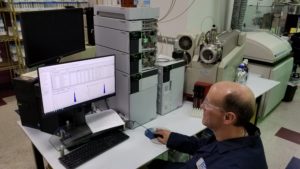
BSK Associates & PFAS Testing.

BSK Associates & PFAS Testing.

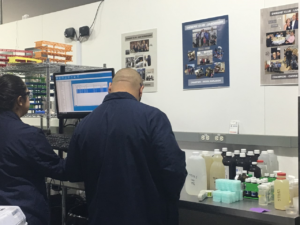
BSK has abundant sample capacity and can add to that capacity quickly.

We were one of the first labs to receive accreditation for testing in California. Furthermore, we have performed PFAS analyses for over 6 years. Subsequently, our laboratory completed thousands of PFAS analyses throughout the U.S. while participating in the EPA’s UCMR3 monitoring program. Therefore, BSK is well versed in reporting and regulatory quality requirements needed for these analytes.

BSK is accredited by the National Environmental Laboratory Accreditation Program (NELAP) and the California Environmental Laboratory Accreditation Program (CA ELAP) for all 18 PFAS compounds in drinking water by EPA’s 537.1 methodology.

Unlike other labs, we do PFAS sampling according to California State PFAS sampling guidelines. Collection of representative samples for PFAS analysis requires stringent Quality Assurance/Quality Control (QA/QX) measures to prevent sample cross-contamination due to the prevalence of these compounds in the environment. and the opportunity for contamination. BSK Associates can be your one stop shop, rather than having to hire another company for state testing needs.

It is important to be proactive, not only to protect your water system, but to protect the community in which you live. If you think you may have PFAS in your water system begin testing now.

Additionally, BSK can help you budget for additional samples. Please call or email one of the representatives below for more information:

Stephane Maupas (Fresno) – 559-497-2888 x212 smaupas@bskassociates.com

Cole Mackelprang (Southern California) – 650-302-2223 or cmackelprang@bskassociates.com

Tina Green (Bakersfield) – 559-262-7036 or tgreen@bskassociates.com

Elizabeth Bunger (Vancouver, WA) – 360-750-0055 x 403 ebunger@bskassociates.com

Brenda Hamilton (Sacramento) – 916-853-9293 x306 bhamilton@bskassociates.com


Engineering Services are also available!

Our clients depend on BSK to help them navigate the maze of permitting and regulatory compliance requirements in a cost-effective manner that reduces risk. BSK’s highly qualified professional staff can assist with negotiating regulatory compliance. For more information on how BSK can assist with environmental matters related to PFAS, please contact:


Lynne Baumgras, Ph.D., PG, CHG, CEG, PMP

559-497-2880x 516

lbaumgras@bskassociates.com


For more information on PFAS check out the links below:

PFAS Phase Investigation Approach Plan from CA Waterboards

General PFAS Information from BSK

PFAS Information from CA Waterboards

EPA’s PFAS Action Plan

Follow Us and Like Us: 

BSK strongly believes in giving back to the communities in which we live and work.  Above all, our goal is to have a positive impact on the people we serve.

Want to be in the “know” on upcoming BSK events, and community service projects?

  • Like us on Facebook.
  • Follow us on LinkedIn and Twitter.

Have a question about the services we offer? Check out our webpage @www.bskassociates.com/.

Looking for a Great Place to Work? You’ve found it! We are proud to be Great Place to Work certified. Check out our job opportunities page for more details.


BSK is certified for California Small Business for Public Works projects. 
https://www.bskassociates.com/wp-content/uploads/2020/02/PFAS-testing-scaled-1.jpg 1440 2560 bskassociates /wp-content/uploads/2026/07/bsk-logo-60.png bskassociates2020-02-24 16:54:192020-02-24 16:54:19BSK Associates & PFAS Testing
BSK: Understanding Deep Foundations

BSK: Understanding Deep Foundations

February 18, 2020/in News/by bskassociates

BSK: Understanding Deep Foundations

 What are Deep Foundations?

Deep foundations are a type of foundation that is used to transfer building loads further down the earth to utilize stable soil. This process is utilized when the existing soil is not stable enough to handle a foundation.

Deep foundations are essential for safety and maintaining the integrity of a building. Especially in California where we have liquification issues within our soil. Proper use of deep foundations will keep a building erect during an earthquake and prevent a structure from collapsing under duress.

Why use a Deep Foundation?

There are several reasons why you would want to use a deep foundation for the integrity of a structure. However, the main reasons would include weak soils, compromised soils, undocumented fills, and liquification.

Weak Soils: Essentially, weak soils is a term used when the existing soils could possibly fail if a shallow foundation were to be used.

Compressible Soils:  These are the soils that have the capability to decrease in volume; soil densification. Basically, when a structure is placed on compressible soil, without deep foundations, over time the soil will compress and pull down.

Undocumented Soil: This term is used when we do not know the stability of the soil.

Liquification: Soil liquification occurs when saturated soil becomes loses strength, usually in an earthquake. Basically, what was solid becomes liquid.

Types of Deep Foundations

There are two main types of Deep foundations; Driven Piles and Drilled Piers. A driven pile is driven into the ground, as you would imagine a nail being driven into a wall with a hammer. In essence, the pile is driven into the earth with a strong hammer. Moreover, with drilled piers, a hole is drilled, a cage is installed, and the hole is filled with concrete.

There are several types of driven piles and drilled piers, there are also specialty piles, such as micro piles.

Driven Piles

Driven Piles usually consist of; Timber Piles, Concrete Piles, Steel Piles.

Timber Piles would usually be used in a marine type environment. They usually last around 30 years and typically support between 15 to 20 tons.

Concrete Piles can be pre-cast or cast-in-place. They are usually reinforced with rebar to prevent breakage. Concrete piles are often used to support buildings that are very heavy; such as a high-rise structure.

There are two types of steel piles; steel H piles and steel pipe piles. H piles are solid piles and often used in commercial construction for bridges and large buildings. Steel piles are often used as an interlocking unit with other sources.

Drilled Piers  

Drilled Piers include Augercast Piers, Helical Piers. While Augercast piers are drilled holes filled with concrete and rebar a helical pier is twisted in and used to lift things up. Often you will see the use of helical piers in situations where foundations need repairs.

Specialty Piles  

In addition to the typical piles and piers referenced above there are several specialty piles that can be used. One of the most popular being Micro piles. Micro piles are usually used for underpinning and are extremely useful in areas that have limited access. They can also be a very cost-effective way to stabilize the foundation. To learn more about deep foundations check out the Deep Foundations Institute.

Why BSK?

BSK’s team of geotechnical engineers and engineering geologists have the technical ability to provide creative, practical, and technologically sound recommendations suited to your budget. We are well versed in the soil and geological conditions throughout California. Furthermore, we have a solid history of providing cost-effective investigations and recommendations for your soil needs.

Follow Us and Like Us: 

BSK strongly believes in giving back to the communities in which we work. We make sure our community involvement goals have a positive impact on the communities which we serve; because, in the end, it’s all about community.

Want to be in the “know” on upcoming BSK events, community service, and projects?

  • Like us on Facebook.
  • Follow us on LinkedIn and Twitter.

Have a question about the services we offer? Check out our webpage @bskassociates.com.

Looking for a Great Places to Work? You’ve found it! We are proud to be Great Place to Work certified. Check out our job opportunities page for more details.


https://www.bskassociates.com/wp-content/uploads/2019/12/Ave-108-Bridge-over-Lakeland-Canal-Tulare-Co_9.25.19-scaled.jpg 1920 2560 bskassociates /wp-content/uploads/2026/07/bsk-logo-60.png bskassociates2020-02-18 16:10:422020-02-18 16:10:42BSK: Understanding Deep Foundations

Soil Compaction Testing

February 4, 2020/in News, Uncategorized/by bskassociates

Soil Compaction Testing

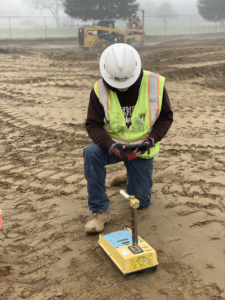
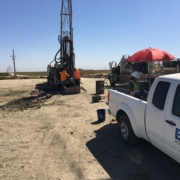
nuclear density gauge test

Soil Compaction Testing is a crucial step in the construction process. Ground that has not been properly compacted can be detrimental to the structural integrity of buildings, retaining structures, roads and pavements, just to name a few. Essentially, proper soil integrity could make or break your structure. Since soils are so critical to a structures reliability you will find that soil compaction testing is required most cases. For instance, most regulatory agencies such as, the Department of Transportation and American Society for Testing and Materials all require laboratory testing. Additionally, you will find that the California and Uniform Building Codes, the geotechnical engineer, and structural engineers will also require soil compaction testing.

Why Compaction Testing is Important

There is a very good reason for all the necessity. Basically, if soil tests are not conducted you risk shifting, cracking, and even the collapse of your building. Roadways could also result in disaster by cracking, sagging, potholes, or even sinkholes. In the end, it’s vital for the success of your structure to ensure you have reliable soil compaction testing. Moreover, having a company that has a seasoned and knowledgeable staff, as well as testing facility, is critical. Not only will a more experienced staff save you time, it will also save you money.

How soil Compaction Testing Works

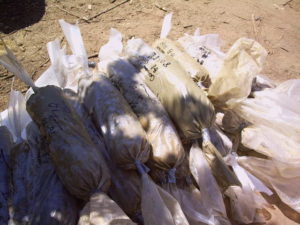
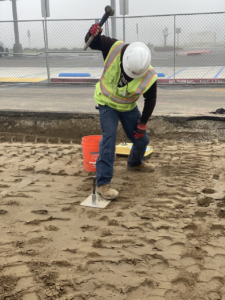
A soil compaction test begins with samples. After excavation a field technician will collect soil samples. An experienced field technician will gather samples from several locations to attain representative samples of various soil types that may be on site. Each soil type, or mixture thereof, has different properties and can act in different ways.  A skilled lab technician will be able to recognize the potential properties of each, and be able to determine best spots for soil extraction. It can also be valuable to take a sample from the stockpile. This is usually done if the technician notices that the stockpile soil has different properties than the other site soil, or because several soil types are being blended together.

Once at the laboratory the process of determining the optimum moisture content and maximum dry density will occur. A lab technician will start by sifting and moisture conditioning of the soil. Once the soil is prepped the soil will go into a cylindrical mold to be compacted at various moisture contents and weighted.

The test is to see how much of the material can be compacted into the same volume at the various amounts of moisture. When a material is too dry it can not compress very tightly. As more water is added, it is able to compact in better and better, so it’s dry density (unit weight calculated removing the water weight) is increased. Once it hits the limit that the material will allow, the water starts displacing the material and the dry density will start dropping, creating a “curve”. The peak of this “curve” is considered the maximum dry density and the optimum moisture for that specific material. Again, it is of vital importance to have an experienced lab for this process.

Nuclear Gauge Testing

The last key step in soil compaction testing involves the use of a soils nuclear gauge. Back at the job site, a field technician uses a nuclear gauge that has two radioactive isotopes (roughly the same mass as the head of a pin), and emits extremely small amounts of radiation into the soil. Inside of the machine there are sensors that detect how much of the radiation makes it back to the machine. One of the sources is for detecting the hydrogen content, which is a direct correlation with the moisture content. The other source is for detecting the wet density.

Using both of these readings, the nuclear gauge calculates the in-place dry density. This number is compared to the maximum dry density that was determined by the lab testing and is expressed in the form of a percentage. Typical requirements are between 90% and 95% of the maximum dry density. If the material changes even slightly, it could drastically affect the results indicating failure. An experienced field technician will notice the change and pull another sample for a curve rather than have the contractor keep trying to work the material wasting time and money.

To find out more about soil compaction requirements in California click here.

Why BSK Associates

Soil Compaction Testing

As mentioned previously, having seasoned field and laboratory technician is key in this process. BSK Associates has been in the industry for over 53 years. Our history in the industry  ensures that our clients receives accurate results in a timely manner. We are a dedicated team focused on developing practical, cost-effective solutions for our clients, and working toward constant improvement within our profession.

Follow Us and Like Us

BSK strongly believes in giving back to the communities in which we work. We make sure our community involvement goals have a positive impact on the communities which we serve; because, in the end it’s all about community.

Want to be in the “know” on upcoming BSK events, community service, and projects?
Like us on Facebook.
Follow us on LinkedIn and Twitter.

Have a question about the services we offer? Check out our webpage @bskassociates.com.
Looking for a Great Places to Work? You’ve found it! We are proud to be Great Place to Work certified. Check out our job opportunities page for more details.

https://www.bskassociates.com/wp-content/uploads/2020/02/photo-e1580834519997.png 553 471 bskassociates /wp-content/uploads/2026/07/bsk-logo-60.png bskassociates2020-02-04 16:35:572020-02-04 16:35:57Soil Compaction Testing
  • Understanding Your Insurance CoverageJuly 6, 2026 - 6:00 am
  • RCRA Appendix IX Groundwater Monitoring
    RCRA Appendix IX Groundwater Monitoring: BSK Expands ServicesJune 19, 2026 - 8:26 am
  • Hexavalent Chromium Testing in California
    Hexavalent Chromium Testing in CaliforniaMay 20, 2026 - 11:00 am
  • Q1 Corporate Sponsorship Supports San Ramon FC 
    Building Community Through Purpose: BSK Associates’ Q1 Corporate Sponsorship Supports San Ramon FCMay 15, 2026 - 7:40 am
  • Preliminary Environmental Assessment for School Sites
    Preliminary Environmental Assessment For School SitesMay 6, 2026 - 8:47 am
  • Red Flags In Contract Language
    Red Flags in Contract LanguageApril 22, 2026 - 9:37 am
  • communication in geoprofessional practice
    Communication in the Geoprofessional PracticeMarch 26, 2026 - 2:50 pm
  • Phase I Environmental Site AssessmentMarch 3, 2026 - 3:18 pm
  • BSK Associates Announces Q4 2025 Corporate Sponsorship Winner and Selected Community OrganizationFebruary 19, 2026 - 3:06 pm
  • Taming the Time Management BeastJanuary 6, 2026 - 8:44 am
  • Unlock the Power of Biomass with Fast, Reliable Analytical TestingNovember 10, 2025 - 5:00 am
  • Renea Rangell to Deliver Keynote at ACIL Annual Meeting: Elevating Lab Leadership in 2025
    Renea Rangell to Deliver Keynote at ACIL Annual Meeting: Elevating Lab Leadership in 2025October 31, 2025 - 9:16 am
  • BSK Associates Announces 3rd Quarter Sponsorship of Kevvy’s Vision Project, Honoring Legacy of Community ServiceOctober 27, 2025 - 9:21 am
  • Why Testing Residential Well Water Is Crucial When Buying a HomeOctober 13, 2025 - 5:00 am
  • Building Your Geoprofessional Network: From Conference Small Talk to Lasting Business RelationshipsOctober 7, 2025 - 4:30 am
BSK Associates

(800) 669-3201

Corporate Headquarters

691 N. Laverne Ave. STE 101
Fresno, CA 93727
Local: (559) 497-2880

Hours of Operation

Monday – Friday 8 AM - 5 PM
Office hours vary by location

Subscribe to BSK PULSE

Thank you for signing up.
Please correct the marked field(s) below.
1,true,6,Contact Email,2 1,false,1,First Name,2 1,false,1,Last Name,2
Close
© 2026 Copyright BSK Associates | Accessibility |  NFY Interactive
  • Link to Facebook Link to Facebook Link to Facebook
  • Link to Instagram Link to Instagram Link to Instagram
  • Link to LinkedIn Link to LinkedIn Link to LinkedIn
  • Link to Youtube Link to Youtube Link to Youtube
Scroll to top Scroll to top Scroll to top